


Old School Meets New School: 2026 Tundra vs 2026 Chevy Silverado 1500
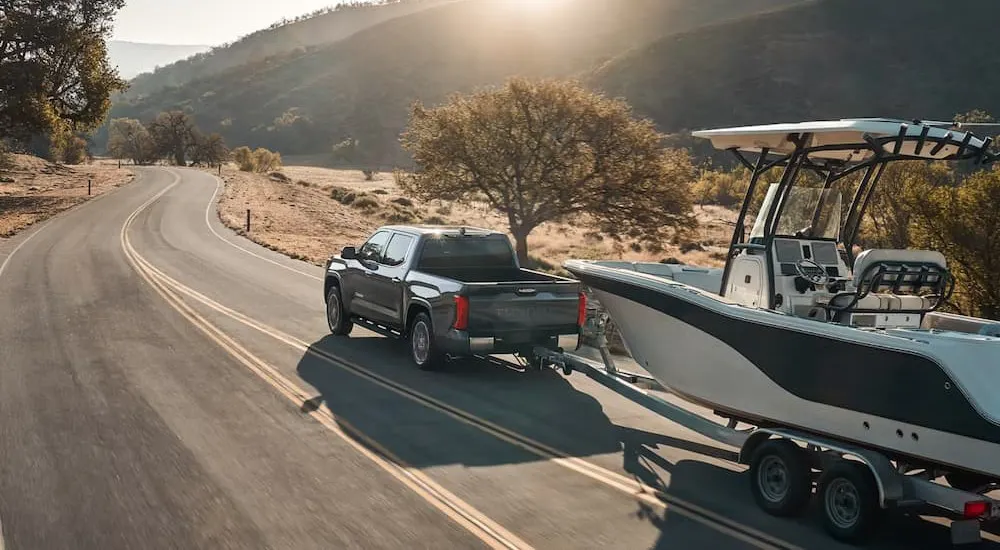
It’s a battle of the old school versus the new school as we pit the 2026 Tundra against the 2026 Chevy Silverado 1500. That might sound like a little bit of an oversimplification, especially when you consider the fact that both models made their debut in 1999, but the Toyota and Chevy pickups illustrate an important schism that’s come to shape today’s market. Pop the hood on the latest models, and you’ll be met with a clear illustration of this developmental divide. While the Tundra has eagerly adopted turbocharging, hybrid powertrains, and other efficiency-enhancing technologies, the Silverado seems stuck in the past with its bulky V8 and diesel options. The same ethos extends to the Tundra’s interior, where you’ll find the segment’s largest infotainment display and advanced driver-assistance systems (ADAS) like adaptive cruise control, a digital rearview mirror, and other modern tech features that allowed the pickup to post some of the best sales in its 25-year run, with 147,000 units moved in 2025 alone. Throw in the fact that the Tundra’s base engine significantly outperforms the Silverado with a maximum towing capacity of 12,000 lbs, and it’s easy to understand the Tundra’s meteoric rise. Let’s dive into some of the key differences between the two trucks as we cruise into the future with a Toyota Tundra for sale near Yukon.
Performance and Towing
The Toyota Tundra keeps things simple for 2026, offering two engines. It would be easy to ding Toyota for the relatively basic lineup, but any apprehensions are bound to melt away when you get a look at the truck’s performance resume. There’s nothing basic about the Tundra’s base engine, which outpaces not only the Silverado but the rest of the full-size segment with 358 hp to its name. Better yet, every trim outside the entry-level SR can squeeze 389 hp out of the same mill, which is a full 64-hp improvement over the second-place finisher in the Ford F-150. Most models require drivers to ascend the trim ladder if they want to unlock a truck’s full towing potential, but the Tundra is a notable exception, with even this standard engine boasting the ability to pull 12,000 lbs.
It’s hard to improve on the Tundra’s base engine, but Toyota found a way with a new hybrid powertrain introduced in 2022. The pickup’s 3.4L i-FORCE MAX turbocharged V6 is paired with an electric motor and a 1.87-kWh battery to deliver an impressive 437 hp and 583 lb-ft of torque. Those numbers put the Tundra right towards the top of the pickup pack, and give the truck the sort of zero-to-60-mph time that you might expect from a sports car. The hybrid Tundra can sprint up to 60 mph in just 5.5 seconds compared to 5.9 seconds for the gas-powered model.
It’s selection, not performance, that defines the Silverado’s 2026 engine lineup. While the Chevy can’t compete on pure power, the Silverado offers drivers plenty of options with four engines. The lowlight would probably be the base engine, which, while fairly efficient at 20 MPG combined, lags behind the Tundra’s entry-level offering in terms of power at 310 hp. That limits the Silverado’s 2.7L I-4 engine to just 9,500 lbs of maximum towing capacity, which is a far cry from the 12,000-lb capacity of the entry-level Tundra.
If you’re the type of pickup purist who believes that every full-size truck deserves its own V8 engine, Chevy has you covered with both 5.3L and 6.2L options to choose from. The larger V8 delivers impressive numbers with 420 hp and 460 lb-ft of torque, but it isn’t the most economical option, with an EPA-estimated 17 MPG combined. While the 6.2L model is no slouch in the towing department with the ability to pull 13,200 lbs, the Silverado’s available turbo-diesel has a slight edge at 13,300 lbs. In addition to this impressive towing capacity, those opting for the 3.0L Duramax turbo-diesel will be able to enjoy an eco- and wallet-friendly ride with the engine offering 23 MPG in the city around Yukon and up to 28 MPG on the highway when you hit I-40.
Infotainment and Convenience
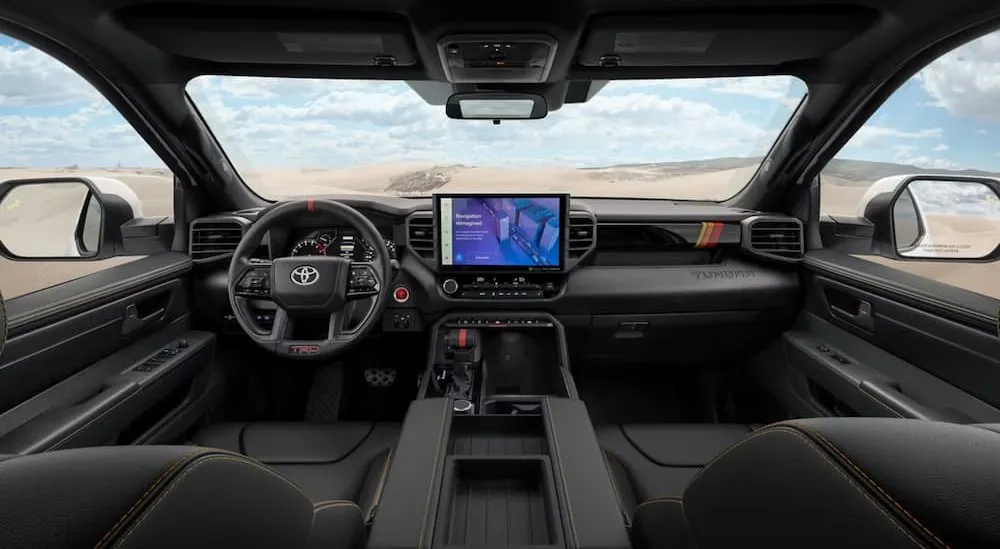
The current third-generation Tundra hit the market in 2022, which gives the full-size model a significant advantage over some of its pickup peers in terms of interior tech. While the Tundra offers a standard 8.0-inch touchscreen infotainment system, a massive 14.0-inch upgrade enters the picture on the Limited trim. That puts the 2026 Tundra right towards the top of the full-size segment, especially when compared to the Silverado 1500. Chevy’s pickup ships with a standard 7.0-inch screen, while the larger version measures in at 13.4 inches. It’s not the biggest gap you’ll find between models, but it could make a difference to the overall user experience. From accessing GPS directions and streaming content to making calls and texts and checking on the weather, today’s infotainment systems allow Yukon drivers to stay digitally connected no matter where the road might take them. That said, all of that cutting-edge tech doesn’t amount to much if it can’t be easily accessed. The Tundra’s generous 14.0-inch display offers an expansive, intuitive interface that won’t force you to dive into random menus and settings to leverage the full power of the infotainment system.
In addition to its sheer size, the Toyota’s infotainment system also includes Bluetooth connectivity, wireless Apple CarPlay and Android Auto smartphone integration, and an available Wi-Fi hotspot that’ll keep you from burning through your data when traveling outside your normal coverage area. The Silverado 1500 offers largely the same setup in a smaller package, but lags behind its Toyota rival in a few key areas. The Tundra’s base trim offers a lot of value, with the entry-level model including some convenience-enhancing tech that’s a welcome surprise given the truck’s low starting price. From hands-free entry and push-button start to a remote-locking tailgate that lifts easily into place, the Tundra SR punches well above its modest MSRP to give drivers a thoroughly modern experience. The Silverado’s base Work Truck trim can’t keep pace with a basic design that offers little in the way of advanced technology. This is understandable when you consider the truck’s intended role as a fleet vehicle, but the bare-bones cabin is still a little shocking for a 2026 model.
Range-Topping Trims
Comparing base trims is an easy way to illustrate key differences between models, but few buyers actually leave the lot in an entry-level truck. It’s easy to understand why, especially when you start to learn about some of the premium features that can be found on the higher end of the trim ladder. Take the 2026 Tundra, for example. The Capstone trim entered the picture with the arrival of the third-generation Tundra back in 2022. It has quickly become one of the most luxurious options in the full-size segment, with an opulent design that leaves little to be desired. Toyota started with the already-enticing Platinum trim and pulled out all of the stops to create a lush ride that you won’t soon forget. The Capstone includes the Platinum’s upgraded LED headlights, 120-volt power outlets, panoramic sunroof, and heated/ventilated seats, but then sweetens the pot with a full suite of comfort, convenience, and performance tech. The hybrid powertrain comes standard, as does Toyota’s robust 4WD system, and there’s no denying the trim’s curb appeal thanks to an eye-catching set of 22-inch alloy wheels and Capstone-exclusive detailing.
Toyota has automated everything that isn’t nailed down with power running boards and a power cargo bed step, but it’s the interior where the Capstone really gets to shine. The truck’s premium leather upholstery, ambient interior lighting, and rear window sunshades help to create an automotive oasis on even the busiest road, and the noise-reducing front door windows provide a little on-the-go tranquility as you cruise through Yukon. The top trim is just as tech-forward as the rest of the Tundra lineup with a premium 12-speaker JBL audio system, wireless smartphone charger, digital rearview mirror, and a surround-view camera system, not to mention a head-up display that projects important driving data right on the windshield.
How does Chevy’s top trim compare with the Tundra? Chevy’s top trim is more affordable than the Tundra Capstone, but unfortunately, it shows. The Silverado High Country does elevate the pickup above the standard model, but it’s no match for the Capstone’s exhaustive approach. The automaker seems to be riding the fence with the High Country, which includes some performance features and off-road attributes that don’t significantly boost the model’s luxury appeal. The dual exhaust and recovery hooks are a nice touch, but they also seem like a misallocation of resources when the High Country lacks the Capstone’s ventilated rear seats, sun shades, and other features you would expect for the price. It’s also a bit hard to explain the fact that adaptive cruise control is limited to the High Country while the fairly basic ADAS can be found on every Tundra trim.
A Tale of Two Trucks
There’s no understating the impact that the Chevy Silverado has had on the pickup segment. A compelling combination of utility and convenience has made the full-size model one of the segment’s bestselling trucks, but that kind of success can come with drawbacks. Chevy’s reluctance to rock the boat has stunted the Silverado’s development, leaving the pickup behind many of its peers in incorporating modern technology and design. The refusal to offer a hybrid option might be the most glaring example, but the Silverado’s relatively simple infotainment setup, lackluster ADAS tech, and questionable luxury credentials also play a role in the pickup’s poor showing. Toyota has taken a decidedly different tack with the Tundra, eagerly adopting new features that prove a pickup can be just as comfortable and convenient as any other vehicle. Simply put, the Silverado shows where the pickup segment has been, and the Tundra illustrates where the category is headed as we cruise into the future.